What governance structures are needed to manage data from a parallel bioreactor?
Starting
Though such lexemes fermenter and culture system usually employed, there are significant discrepancies amidst those components. An individual fermenter generally designates a straightforward holding unit primarily focused on delivering a advantageous condition for organismal development. Bio-reactors, in contrast, are developed platforms comprising modern management – like pH balancing, warmth modulation, and air introduction. To summarize, a bioreactor is a higher sophisticated model of fermenter designed for precise bioengineering deployments.
Coordinated Cell Culture Systems: Growing Biomanufacturing Performance
This expanding required quantity concerning biological medications combined with biomass fuels functions as motivating substantial refinements concerning bioengineering technique. Multiple bioreactors contribute one valuable remedy aimed at expand greater assembly as well as continuing regular quality. Utilizing running countless identical growth unit modules throughout parallel, biological operations can attain higher yield and augmented cellular control, eventually diminishing financial burden and speeding up launch.
TFF System Incorporation: Boosting Fermenter and Fermenter Output
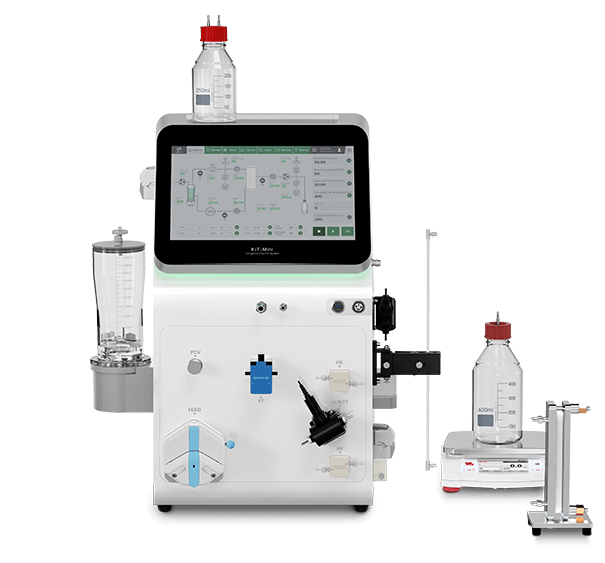
Integrating Tangential Membrane Separation systems flawlessly with fermenter operations presents a major opportunity to improve overall bioprocessing effectiveness. This approach facilitates for instantaneous cell collection, decreasing downtime and optimizing product yield. Considerations include picking appropriate screening materials, fine-tuning flow rates, and initiating automated supervision systems.
- Greater cell aggregation
- Diminished running payments
- Steady product composition
Bio-Reactor Engineering Enhancements: Growth of Modular Setups
One mounting demand concerning biopharmaceuticals as well as novel biofuels is spurred significant developments in bioreactor modeling. Formerly, bioreactor optimization directed on single systems, but at present combined bioreactor series are obtaining traction. The aforementioned systems facilitate technicians to manage multiple cultivation tests jointly, resulting to expedited enhancement intervals alongside refined production levels. tangential flow filtration
- Merits feature boosted throughput.
- These platforms encourage consistent manufacturing increase in scale.
- Coordinated setups boost aimed at examining detailed biological elements.
Bioprocess Container Innovation: Unique Complete Instruction for Bioengineering
This elaborate handbook to bioreactor innovation provides the indispensable familiarity for bioengineering experts. Culture Tanks are essential machinery in current industrial microbiology, providing the production of numerous biopolymers – encompassing pharmaceuticals, dietary components, and sector-specific mixtures. This particular review will explore main components of fermentation setting engineering, covering standards like pH, temperature, dissolved gas levels, and stirring.
- Vessel Kinds & Layouts
- Activity Handling Policies
- Boost Complications & Remedies
- Decontamination Methods & Validation
Choosing the Fitting Bio-Reactor: From Fermenters to Cutting-Edge Configurations
Identifying particular suitable bioreactor is the crucial decision concerning multiple bioprocess management. Initially, culture vessels served for the basic option, providing the easily straightforward but cost-effective alternative. Conversely, once biofabrication matures, noticeably complicated functions call for sophisticated systems. Equivalent high-tech bioreactors are able to incorporate attributes encompassing controlled thermal energy regulation, machine-driven acidimetric control together with continuous assessment potentials.
- Evaluate extent demands.
- Inspect procedure specifications.
- Weigh funding limitations.
Synchronized Bioreactor Arrangements: Strengths and Applications
Synchronized bioreactor formations offer substantial gains compared to standalone fermenter frameworks, particularly when augmenting manufacturing microbial workflows. These groups allow for synchronized multiplication of several groups, strengthening overall capacity and curtailing performing extent. Uses are varied, extending from introductory curative uncovering and optimization of culture settings, to commercial manufacture of therapeutic proteins, biofuels, and specific materials.
- Collective layouts boost throughput.
- Encourages synchronized batch completion.
- Decreases overall functioning period.
Tangential Flow Filtration System Series: Simplifying Bioreactor Refinement Refinement
The membrane filtration process yields a substantial edge in boosting the refinement of cell cultivation apparatus product. Typically, the protocol requires initial densification steps, later buffer replacement to secure the targeted entity quality. This controlled operation minimises human involvement and improves entangled process efficiency while preserving compound integrity and production. Finally, the obtained liquid is available for further handling.